Guide · Jul 27, 2026
Best Bluetooth Speakers for Outdoor Use
Discover the best bluetooth speakers for outdoor use. Evaluate IP ratings, rugged construction, battery life, and sound projection to find the perfect wireless speaker for campsite, beach, or patio.
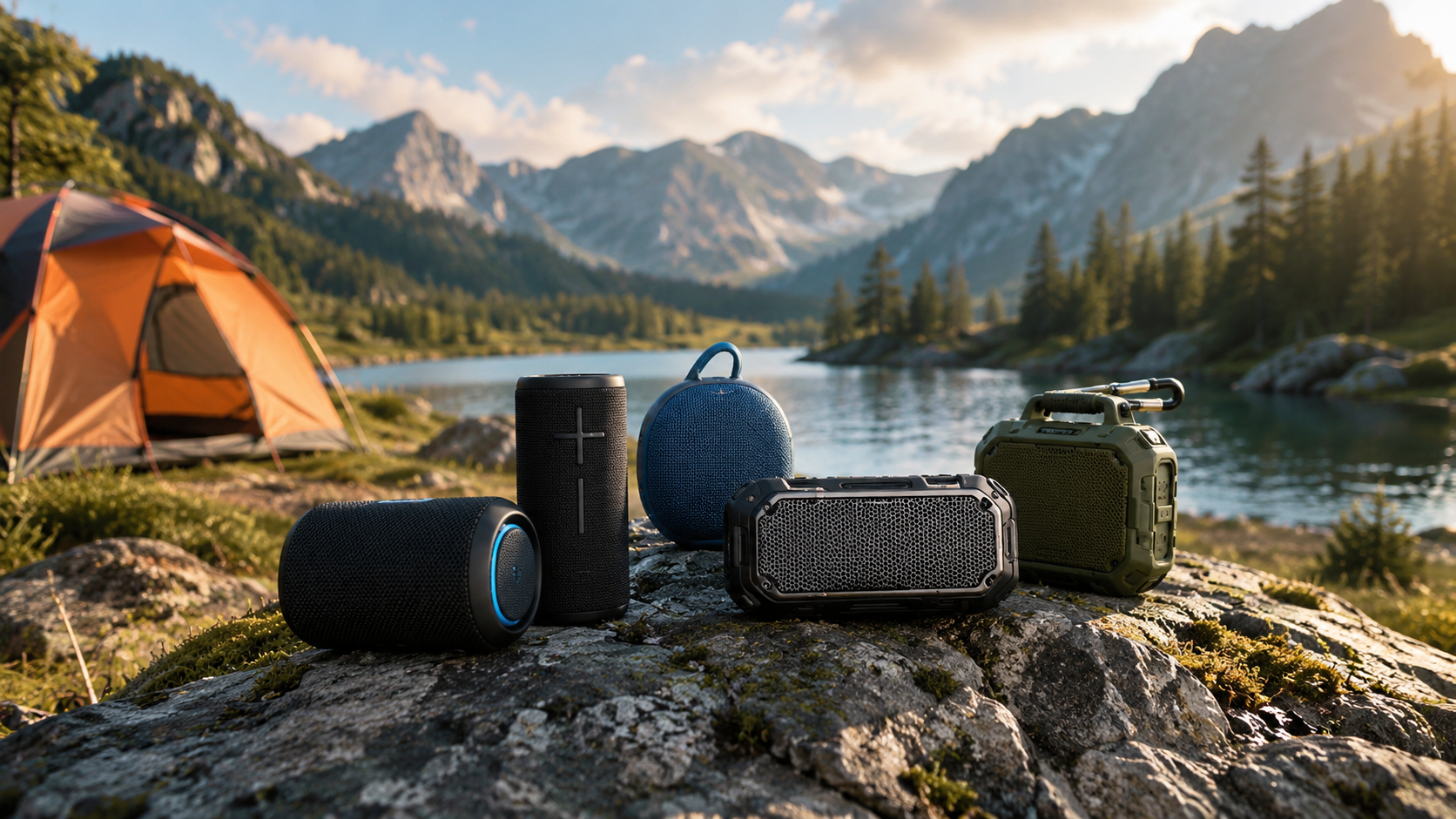
When taking music outside—whether for a weekend camping trip, a backyard barbecue, or a day at the beach—indoor audio gear simply will not cut it. Outdoor environments present unique acoustic and physical challenges, from ambient open-air noise to unpredictable weather and accidental drops. Finding the best bluetooth speakers for outdoor use requires looking beyond raw acoustic power to evaluate weatherproofing, rugged build quality, battery endurance, and portability.
In this guide, we break down top-performing outdoor speakers based on real-world durability, sound projection in open spaces, and essential field features like power bank functionality and multi-speaker pairing.
Key Factors in Finding the Best Bluetooth Speakers for Outdoor Use
Selecting an outdoor speaker involves balancing physical durability against sound clarity. Outdoor acoustics lack room boundaries, meaning sound waves dissipate quickly without walls to bounce off. Therefore, speaker engineering must emphasize efficient projection alongside environmental protection.
Ingress Protection: Unpacking IP67 and IPX7 Ratings
When reviewing specs, paying attention to the Ingress Protection (IP) rating is non-negotiable for outdoor environments:
- IPX7: Protection against immersion in water up to 1 meter deep for 30 minutes, but no tested dust resistance.
- IP67: Complete protection against dust ingress and full waterproof protection against short immersion periods. This is the gold standard for beach and trail use.
- IP68: Heavy-duty resistance suited for continuous submersion under specific manufacturer conditions.
Ruggedness, Drop Resistance, and Buoyancy
Beyond water, physical shock is a constant hazard outdoors. Look for speakers built with TPU rubberized end-caps, woven fabric grilles, and recessed controls. Additionally, if you frequent lakes or pools, select a floating speaker so it does not sink to the bottom if bumped off a float or dock.
Playtime Expectations and Power Bank Capabilities
Advertised battery life is usually measured at 50% volume indoors. Out in the open air, where higher volume levels are required, expect actual playback duration to drop by 20% to 40%. Look for models rating at 12 to 20+ hours, and consider speakers with USB-A or USB-C reverse charging ports to keep your smartphone powered in remote locations.
Top Recommendations: Best Bluetooth Speakers for Outdoor Use
After evaluating acoustic performance, thermal durability, and waterproofing across major audio brands, these models stand out as top performers in outdoor environments.
JBL Charge 5 – Ideal All-Around Outdoor Speaker
The JBL Charge 5 hits the sweet spot for portable outdoor audio. Featuring an IP67 dustproof and waterproof rating, a dedicated tweeter alongside a long-excursion driver, and dual passive bass radiators, it delivers rich bass and clear highs outdoors. Its 7500mAh built-in power bank allows device charging while playing music for up to 20 hours.
Sonos Move 2 – Superior Sound for Patios and Backyards
If maximum audio quality on the patio or deck is your primary goal, the Sonos Move 2 stands out. It features dual tweeters for stereo separation and Automatic Trueplay tuning, which dynamically adjusts acoustics to open spaces. It carries an IP56 weather-resistance rating and offers a massive 24-hour battery life with a convenient base charger.
Ultimate Ears MEGABOOM 3 – Maximum Durability with 360-Degree Sound
Designed for extreme durability, the UE MEGABOOM 3 offers 360-degree sound projection, making it ideal for group gatherings where people sit around a campfire or outdoor table. It is IP67 rated, virtually indestructible, drops-tested, and actually floats in water while continuing playback.
Audio Performance and Open-Air Sound Dynamics
Sound behaves differently outdoors. Indoor reflection increases perceived low frequencies, but open environments can make speaker output sound thin without balanced acoustic engineering.
Overcoming Environmental Acoustic Loss
To combat ambient wind, rustling trees, and open spaces, look for speakers featuring active digital signal processing (DSP) EQ curves tailored for field performance. Dedicated outdoor EQ modes boost low-end punch and mid-range clarity without causing driver distortion at maximum volume levels.
Passive Radiators vs. Dedicated Woofer Drivers
Compact portable speakers rely heavily on passive radiators—unpowered speaker cones driven by air pressure inside the enclosure—to produce deep bass without demanding excessive battery power. For larger outdoor gatherings, speakers combining active woofer drivers with dual passive radiators yield significantly cleaner low-end thump across wider spaces.
Essential Features of the Best Bluetooth Speakers for Outdoor Use
While acoustic driver configuration matters, utility features determine how convenient a speaker is during actual outdoor trips.
Extended Bluetooth Range and Codec Support
Modern outdoor speakers should incorporate Bluetooth 5.0 or higher to maintain stable connections up to 100 feet in open line-of-sight conditions. Codec support like AAC or LDAC helps maintain higher bitrates, while Bluetooth Multipoint allows two users to take turns managing playlist queues without repairing.
Multi-Speaker Daisy Chaining and Broadcast Modes
When one speaker is not enough for large yards or campsites, ecosystem technologies such as JBL PartyBoost, Ultimate Ears PartyUp, or Sony Party Connect let you link over 100 compatible speakers simultaneously to create synchronized outdoor sound coverage.
Practical Maintenance for Outdoor Wireless Speakers
Even rugged, IP-rated audio gear requires routine maintenance after exposure to environmental elements to ensure long-term reliability.
Cleaning off Sand, Dust, and Salt Water
If your speaker encounters ocean spray or salt water, rinse it thoroughly under fresh tap water before letting it dry completely. Salt crystals can corrode exposed charge ports and degrade rubber seals over time. Never plug a charger into a wet USB port, even if the speaker is rated IP67.
Battery Preservation in Hot and Cold Climates
Lithium-ion batteries suffer degraded performance when operated in extreme heat (above 113°F / 45°C) or freezing conditions. Store your speaker in shaded areas on sunny summer days, and keep it inside insulated gear bags when winter camping.
Frequently Asked Questions
What is the best IP rating for an outdoor Bluetooth speaker?
An IP67 rating is ideal for outdoor Bluetooth speakers. It ensures the unit is totally dustproof and can withstand immersion in water up to 1 meter deep for up to 30 minutes, making it safe against rain, spills, beach sand, and accidental drops into pools.
Can I leave my outdoor Bluetooth speaker outside all year?
It is not recommended to leave portable speakers outside year-round. While weather-resistant, continuous exposure to UV rays, extreme freezing temperatures, and humidity can degrade rubber seals, battery chemistry, and fabric exterior grilles over time.
How many watts do I need for a outdoor Bluetooth speaker?
For personal listening or small camping groups, 15 to 30 watts is sufficient. For larger backyard parties or noisy open-air settings, look for speakers rated at 40 to 100 watts or higher to project sound effectively without distortion.
Do outdoor Bluetooth speakers float?
Not all waterproof speakers float automatically. Models specifically designed with lightweight internal buoyancy chambers (such as the UE MEGABOOM 3 or JBL Clip 4) float on water, while denser waterproof speakers may sink.
How do I make my Bluetooth speaker louder outdoors?
To increase perceived volume outdoors without pushing the speaker into distortion, place it near a flat surface like a wall, picnic table backrest, or corner to bounce acoustic energy forward, or pair a second speaker using Party Mode settings.
Will salt water damage an IP67 rated speaker?
While the seals prevent water ingress, salt water leaves corrosive crystal deposits when dried. Always rinse your speaker with fresh tap water after exposure to ocean water or saltwater pools, and let the charging port dry completely before plugging it in.
Conclusion
Selecting the best bluetooth speakers for outdoor use boils down to matching your primary outdoor environment with the right blend of durability, volume output, and battery life. For lightweight hikes and general outdoor activities, mid-sized rugged units like the JBL Charge 5 offer an ideal balance of power and portability. For patio entertainers seeking maximum sound quality, hybrid home/outdoor units like the Sonos Move 2 deliver unmatched acoustic clarity. Prioritize IP67 dust and waterproofing, clean off debris after trips, and your outdoor speaker will deliver high-quality audio across many seasons of adventure.
Related Reading
- understanding IP ratings for electronics — Comprehensive Guide to Waterproof and Dustproof IP Ratings
- best portable power banks for camping — Top Portable Power Banks and Solar Chargers for Trail Use
- tailgate party audio gear recommendations — Best Loud Tailgate Speakers with Deep Bass Output
- how to clean water-damaged electronics — Step-by-Step Maintenance and Cleaning for Outdoor Electronics