Guide · Aug 10, 2026
Best Laptop For Students: Complete 2025 Buying Guide
Find the best laptop for students with our comprehensive guide covering top performance picks, academic major recommendations, battery life considerations, and budget options.
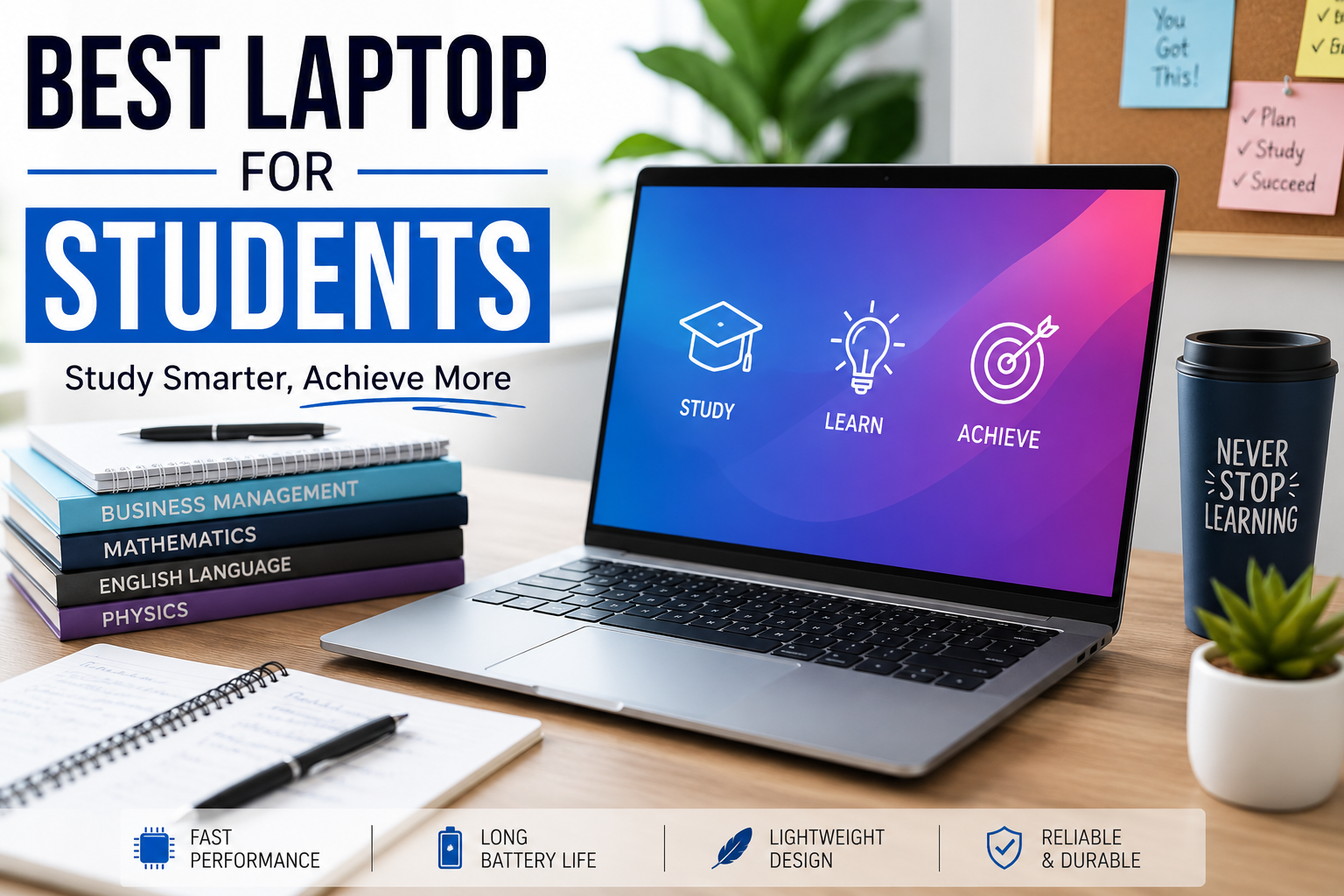
Finding the best laptop for students can feel overwhelming given the hundreds of choices available today. Whether you are typing essays in a lecture hall, compiling code for a computer science project, or editing high-resolution video for a film class, your laptop is your primary academic engine. The ideal student machine must balance processing power, long battery life, portability, and value for money.
In this comprehensive guide, we analyze what makes a notebook student-friendly, evaluate top options across different price points, and help you select the precise hardware specs tailored to your budget and course load.
What Makes the Best Laptop For Students in 2025?
When evaluating laptops for academic use, practical usability takes precedence over raw, power-hungry specifications. Students need devices that survive long days on campus without requiring constant outlet hunting.
Portability and All-Day Battery Life
A student laptop should weigh less than 3.5 pounds to ensure comfortable everyday carry in a backpack. Target a machine that delivers at least 10 to 12 hours of real-world battery life. This allows you to jump between lectures, library study sessions, and group meetings without carrying a charger.
Essential Performance: CPU and RAM
For general coursework, web browsing, and streaming, modern mid-range processors are ideal. Look for at least an Intel Core i5, AMD Ryzen 5, or Apple M-series processor paired with 16GB of RAM. While 8GB can work for light web browsing, 16GB ensures future-proof multitasking when running multiple browser tabs, PDF readers, and software applications simultaneously.
Operating System Selection: macOS, Windows, or ChromeOS
Choosing an operating system depends heavily on software requirements and personal preference:
- macOS: Renowned for efficiency, exceptional battery life, build quality, and seamless integration with iPhones.
- Windows 11: Offers broad software compatibility, extensive hardware options across all budgets, and superior support for engineering or specialized business software.
- ChromeOS: Ideal for budget-conscious students who perform all coursework inside a web browser or Google Workspace.
Top Picks: Evaluating the Best Laptop For Students
Based on durability, keyboard comfort, battery runtime, and overall performance, several models stand out as leading choices for students across different academic tracks.
Best Overall: Apple MacBook Air (M2 or M3)
The Apple MacBook Air remains the gold standard for most high school and college students. Featuring fanless (silent) operation, an exceptionally crisp Liquid Retina display, robust aluminum construction, and up to 18 hours of battery life, it easily manages daily student workflows without slowing down.
Best Windows Ultrabook: Dell XPS 13 & Lenovo Yoga 7i
For Windows users, the Dell XPS 13 provides a premium build with ultra-thin bezels, making it compact enough for small lecture hall desks. Alternatively, the Lenovo Yoga 7i offers a versatile 2-in-1 touchscreen format, allowing students to fold the screen back to take handwritten notes with a stylus.
Best Value Windows Laptop: Acer Swift Go 14
The Acer Swift Go 14 delivers an impressive mix of performance and affordability. Equipped with bright screens, sharp 1080p webcams for online classes, and modern Intel or AMD processors, it delivers high performance at a fraction of premium ultrabook prices.
Choosing the Best Laptop For Students by Academic Major
Not every field of study demands the same hardware specifications. Aligning your laptop setup with your major prevents unnecessary overspending while avoiding software performance bottlenecks.
Engineering, Computer Science, and Data Science
STEM fields often rely on legacy Windows software, virtual machines, and resource-heavy Integrated Development Environments (IDEs). Prioritize:
- CPU: Intel Core i7 / AMD Ryzen 7 or better.
- RAM: 16GB minimum, 32GB recommended.
- OS: Windows 11 (many engineering programs require Windows-native software like AutoCAD, SolidWorks, or MATLAB).
Graphic Design, Film Production, and Architecture
Creative disciplines demand dedicated graphics processors (GPUs) and color-accurate displays capable of covering 100% sRGB or DCI-P3 color spaces. A dedicated GPU (such as an NVIDIA RTX series or Apple Pro/Max silicon) speeds up video rendering and 3D modeling work.
Business, Humanities, and General Education
Majors focused on writing, research, spreadsheets, and presentations do not require heavy graphics power. Prioritize an excellent keyboard, a sharp high-contrast screen, light overall weight, and maximum battery endurance.
Best Budget Laptop For Students Under $500
You do not need to spend over $1,000 to get a reliable machine for high school or college studies. Budget-focused students have strong options if they know where to compromise.
Chromebooks for Lightweight Academic Work
Devices like the Asus Chromebook Flip or Lenovo IdeaPad Flex 5 Chromebook offer fast boot times, strong security, and solid battery life under $400. They are perfect for writing papers in Google Docs, research, and web-based tools, though they cannot run traditional desktop applications.
Entry-Level Windows Laptops
For full Windows application support on a tight budget, look for models like the Lenovo IdeaPad Slim 3 or Acer Aspire 5. Seek configurations featuring at least 8GB RAM, a 1080p Full HD display, and solid-state storage (SSD) rather than slow eMMC memory.
Key Hardware Specifications to Consider Before Buying
Understanding core technical components helps you read spec sheets effectively and avoid purchasing outdated or underpowered hardware.
Display Size, Resolution, and Eye Strain
A 13.3-inch to 14-inch screen offers the optimal compromise between productivity real estate and bag space. Aim for a resolution of at least 1920x1080 (Full HD). Look for anti-glare coatings or matte displays if you frequently study under bright library fluorescent lighting.
Keyboard Comfort and Port Selection
Because you will type thousands of words every semester, comfortable key travel and a responsive trackpad are critical. Additionally, ensure the laptop offers necessary connectivity: USB-C (for charging and external display support), at least one standard USB-A port, and a 3.5mm headphone jack.
Storage: 256GB vs 512GB+ SSDs
Always select a drive labeled SSD (Solid State Drive) rather than HDD for fast boot times and instant application loading. While 256GB is acceptable if you store most files in cloud services (Google Drive, OneDrive), 512GB SSD provides peace of mind for local media, applications, and large course files.
How to Get Student Discounts on Laptops
Students can leverage educational pricing programs and seasonal sales events to reduce out-of-pocket expenses significantly.
Official Education Stores and Back-to-School Deals
Major manufacturers like Apple, Dell, Lenovo, and HP maintain dedicated education stores offering 5% to 10% discounts for verified students with an .edu email address. Furthermore, purchasing during peak back-to-school promotional windows (July through September) often yields bundled incentives like gift cards or discounted accessories.
Refurbished and Open-Box Laptop Options
Buying certified refurbished hardware directly from manufacturers (such as Apple Certified Refurbished or Dell Outlet) provides like-new hardware with standard factory warranties at discounts ranging from 15% to 30% off original retail prices.
Frequently Asked Questions
What is the best laptop for students overall?
The Apple MacBook Air (M2 or M3) is widely considered the best overall laptop for most students due to its lightweight design, exceptional 18-hour battery life, silent operation, and durable aluminum chassis.
Is 8GB of RAM enough for a student laptop?
While 8GB of RAM is sufficient for basic web browsing, word processing, and video calls, 16GB of RAM is strongly recommended for seamless multitasking, handling heavy web applications, and future-proofing over a 4-year degree.
Mac vs Windows: Which is better for college students?
It depends on your major. Macs excel in battery life, build quality, and creative workflows. Windows laptops offer broader affordability and are necessary for specialized engineering, computer science, and business analytics software.
How much storage space does a college student need?
A minimum of 256GB SSD storage is acceptable for general studies using cloud storage. However, 512GB SSD is recommended for long-term usability, media files, software installations, and offline document storage.
Are Chromebooks suitable for college work?
Chromebooks are suitable for students whose coursework is entirely web-based (Google Docs, web research, online quizzes). However, they cannot run full desktop programs like Microsoft Word desktop apps, Adobe Creative Cloud, or engineering software.
How do students verify eligibility for laptop discounts?
Students typically verify eligibility by registering with an official institutional '.edu' email address or validating student status through third-party platforms like UNiDAYS or Student Beans.
Conclusion
Selecting the best laptop for students ultimately comes down to identifying your specific academic requirements, daily mobility needs, and target budget. For most students, a well-rounded thin-and-light ultrabook like the MacBook Air or a high-quality Windows 2-in-1 offers the ideal mix of long battery life, snappy performance, and everyday comfort. By taking advantage of student discounts and choosing specifications tailored to your field of study, you can secure a reliable academic tool that will last throughout your education.
Related Reading
- laptop buying guide for engineering students — Best laptops specifically tailored for engineering software requirements
- MacBook vs Windows laptop comparison — In-depth breakdown of macOS vs Windows 11 performance and software compatibility
- best budget Chromebooks — Comprehensive review of low-cost Chromebooks for light academic use
- how to extend laptop battery life — Actionable tips for optimizing laptop battery endurance on campus