Guide · Aug 09, 2026
Best Smartwatch For Fitness Tracking
Discover the best smartwatch for fitness tracking. Compare top options for GPS accuracy, heart rate tracking, battery life, and health metrics to find your ideal workout companion.
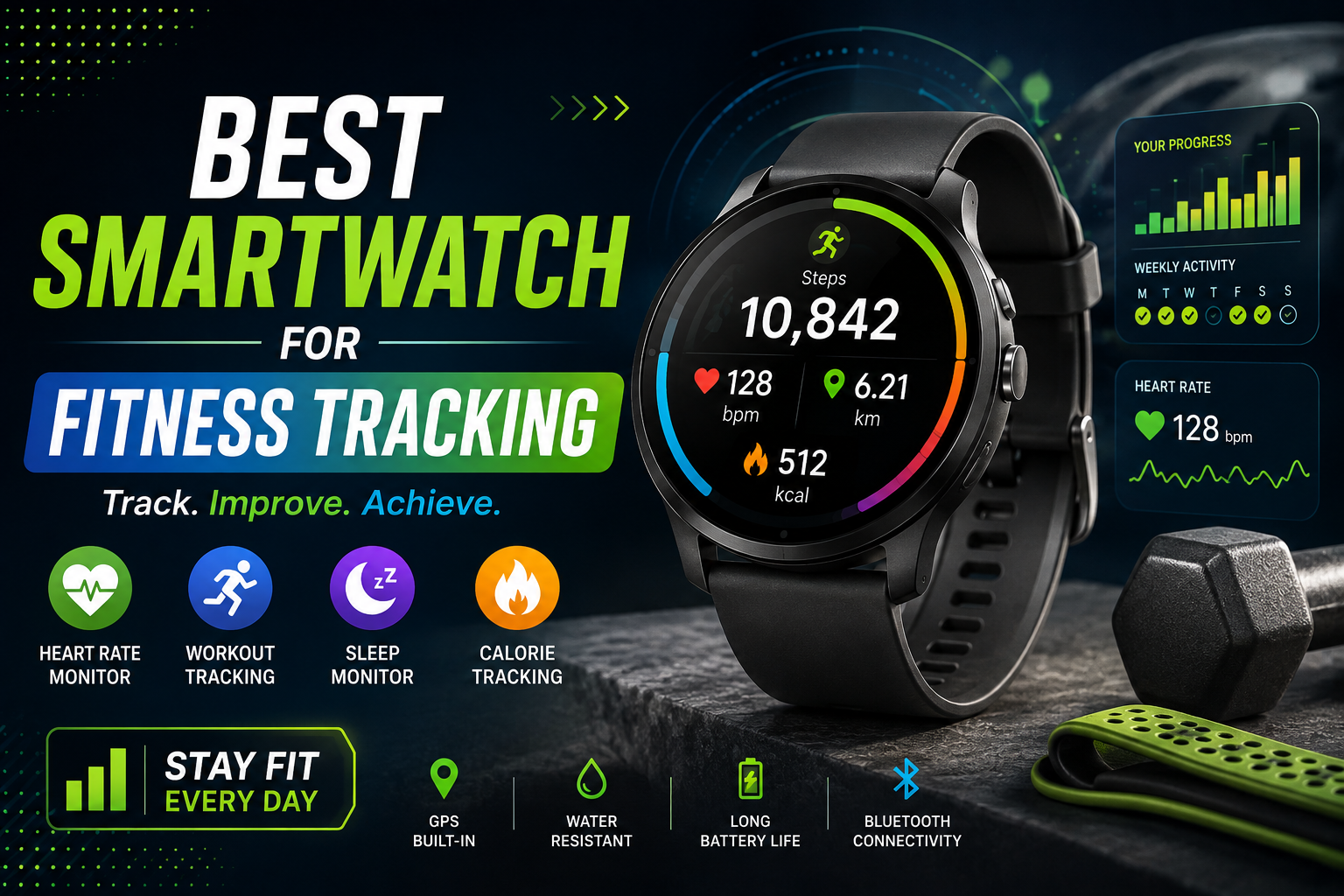
Finding the best smartwatch for fitness tracking can transform your daily workouts, recovery habits, and overall health monitoring. Modern wearables have evolved far beyond basic step counters; today's leading devices function as dedicated training partners capable of measuring Heart Rate Variability (HRV), analyzing sleep staging, tracking dual-frequency GPS coordinates, and offering personalized workout recommendations.
Whether you are training for a marathon, lifting heavy in the gym, or simply looking to establish a more active lifestyle, selecting the right device depends on your specific performance goals, operational ecosystem (iOS vs. Android), and budget. In this guide, we evaluate the top wearables on the market to help you pinpoint the ideal balance between fitness analytics and everyday smart capabilities.
Key Features to Look For in the Best Smartwatch for Fitness Tracking
When searching for the best smartwatch for fitness tracking, marketing buzzwords can easily obscure what truly matters for real-world performance. Prioritize devices that deliver high sensor precision, robust durability, and reliable software analytics over superficial style choices.
Dual-Band GPS and Mapping Precision
For outdoor athletes, single-frequency GPS often suffers from signal drops around tall buildings, dense tree coverage, or mountain terrain. Modern premium sports watches feature multi-band, dual-frequency GNSS (GPS, GLONASS, Galileo, BeiDou) which dramatically improves positioning accuracy, pace calculation, and route mapping.
Optical Heart Rate Sensors and HRV Tracking
The core of modern fitness analytics relies on multi-LED optical heart rate sensors built into the back casing. Look for watches that support continuous pulse monitoring and Heart Rate Variability (HRV) tracking. HRV measures subtle micro-intervals between heartbeats, providing critical insights into system stress, central nervous system fatigue, and physical readiness.
Display Visibility and Battery Longevity
Choose between high-contrast AMOLED screens—which offer vivid graphics but consume higher power—and transflective Memory-in-Pixel (MIP) displays, which excel in direct sunlight and use minimal battery. Your choice directly affects how often you will need to charge your watch during multi-hour GPS recording sessions.
Top Contenders for the Best Smartwatch for Fitness Tracking
The market offers options tailored to different user profiles, ranging from lifestyle-centric smartwatches with strong fitness software to dedicated endurance computers built for rugged conditions.
Garmin Forerunner 265: Best Overall for Athletes
The Garmin Forerunner 265 strikes an ideal balance between deep athletic tracking and smartwatch functionality. Featuring a vibrant AMOLED touchscreen alongside classic physical buttons, it delivers dual-band GPS accuracy, training readiness metrics, morning reports, and advanced running dynamics without requiring a monthly subscription.
Apple Watch Series 9: Best Smart Experience for iPhone Users
If seamless iOS integration, third-party app availability, and comprehensive lifestyle management are high priorities, the Apple Watch Series 9 excels. It boasts ECG logging, optical cardiac warnings, automatic workout detection, and precise heart rate tracking that rivals dedicated chest straps during steady-state cardio.
Fitbit Sense 2: Best for Health & Stress Management
For users who emphasize holistic health, sleep architecture, and stress management over advanced triathlon metrics, the Fitbit Sense 2 provides continuous cEDA (electrodermal activity) sensing to flag daily stress patterns while offering intuitive health scores.
Understanding Advanced Fitness Metrics and Health Tracking
The true value of modern wearables lies in how raw sensor data is transformed into actionable biometric insights. Understanding these metrics ensures you utilize your device to its fullest potential.
VO2 Max and Aerobic Capacity
VO2 Max estimates the maximum volume of oxygen your body can utilize during incremental exercise. Leading watches calculate this score by pairing heart rate data with movement speed, offering a clear snapshot of your cardiorespiratory fitness level over time.
Training Load and Recovery Advisor
Advanced fitness algorithms calculate acute training load versus chronic load. This metric informs you whether your recent training volume is building fitness, maintaining current conditioning, or pushing you toward overtraining and potential injury risk.
Evaluating Battery Life Across Fitness Smartwatches
Battery performance varies significantly across different brands and display technologies. Understanding your usage requirements prevents unexpected shutoffs mid-workout.
Smartwatch Battery Life vs. Outdoor Endurance Watches
Full-featured smartwatches like the Apple Watch or Samsung Galaxy Watch typical require daily charging (18 to 36 hours of battery life). In contrast, specialized endurance watches from Garmin, Coros, or Suunto can operate for 7 to 20 days on a single charge in smartwatch mode, or up to 40 hours in continuous GPS mode.
Solar Charging Enhancements
Select outdoor fitness devices incorporate solar harvesting rings directly around the display bezel. While solar power rarely fully recharges a dead watch, it can significantly slow down battery drain during long ultrarunning, hiking, or bike-packing sessions in sunny environments.
How to Choose the Best Smartwatch for Fitness Tracking Based on Your Goals
Matching your device to your primary exercise discipline ensures you get the features you need without paying for unnecessary extras.
For Runners and Cyclists
Focus on multi-frequency GPS accuracy, downloadable offline course navigation, structured workout creation, power meter connectivity (via Bluetooth or ANT+), and dedicated cadence tracking.
For Strength Training and Gym Workouts
Look for watches with automatic rep counting, customizable gym profiles, manual set tracking interfaces, and robust water/sweat resistance combined with durable screen glass (such as Sapphire crystal).
For Everyday Health and Wellness
Prioritize comfortable form factors for 24/7 wear, automatic sleep tracking, passive heart rate anomaly notifications, step goals, and intuitive companion app interfaces.
Frequently Asked Questions
Which smartwatch has the most accurate heart rate monitor?
The Apple Watch Series 9 (and Ultra 2) along with recent Garmin models (featuring the Elevate Gen 5 sensor) consistently score among the highest in independent testing for optical heart rate accuracy across steady-state cardio and high-intensity interval training.
Do I need to carry my phone while running with a fitness smartwatch?
No. Any smartwatch with built-in GPS can independently track your outdoor route, distance, pace, and speed. However, if you need cellular connectivity, live safety alerts, or streaming music without pre-downloading audio tracks, you will need a smartwatch with LTE support.
Can a fitness smartwatch accurately count reps during strength workouts?
While many smartwatches offer automatic rep counting for standard upper-body movements like bench presses or biceps curls, they can struggle with lower-body or isometric movements. Most athletes manually edit set counts and weight loads on-screen during strength sessions.
What is the difference between a fitness tracker and a fitness smartwatch?
Fitness trackers usually emphasize a compact band design, basic health metrics (steps, sleep, basic HR), and limited smart connectivity. Fitness smartwatches offer larger color touchscreens, advanced workout tracking, third-party apps, music storage, mobile payments, and cellular capabilities.
Are fitness tracking smartwatches waterproof for swimming?
Most top fitness smartwatches carry a water resistance rating of at least 5 ATM (water-resistant to 50 meters), making them fully suitable for lap swimming in pools and open water. Specialized dive or ocean watches offer ratings up to 10 ATM or EN13319 certification.
Conclusion
Selecting the best smartwatch for fitness tracking ultimately comes down to identifying which metrics motivate you most and how seamlessly the watch fits into your daily routine. Dedicated endurance athletes will benefit from the deep analytics, long battery life, and physical controls of devices like the Garmin Forerunner series, whereas lifestyle-focused users seeking a blend of communication, convenience, and reliable workout metrics will thrive with the Apple Watch or Samsung Galaxy Watch platform.
Before buying, assess your primary activities, target battery requirements, and software preference. Investing in the right fitness smartwatch empowers you to track your progress accurately, optimize recovery intervals, and reach your athletic potential.
Related Reading
- Garmin fitness watches — Comprehensive Garmin Watch Comparison and Buying Guide
- Heart Rate Variability (HRV) — How to Use HRV Metrics to Prevent Overtraining
- best running watches with GPS — Top Recommended Running Watches for Marathon Training
- sleep tracking technology — How Wearable Sleep Staging Metrics Work