Guide · Aug 12, 2026
Why Does My TV Look Too Dark?
Is your TV display dark, dim, or washed out? Learn why your TV looks too dark and discover step-by-step settings, HDR fixes, and hardware checks to restore full brightness.
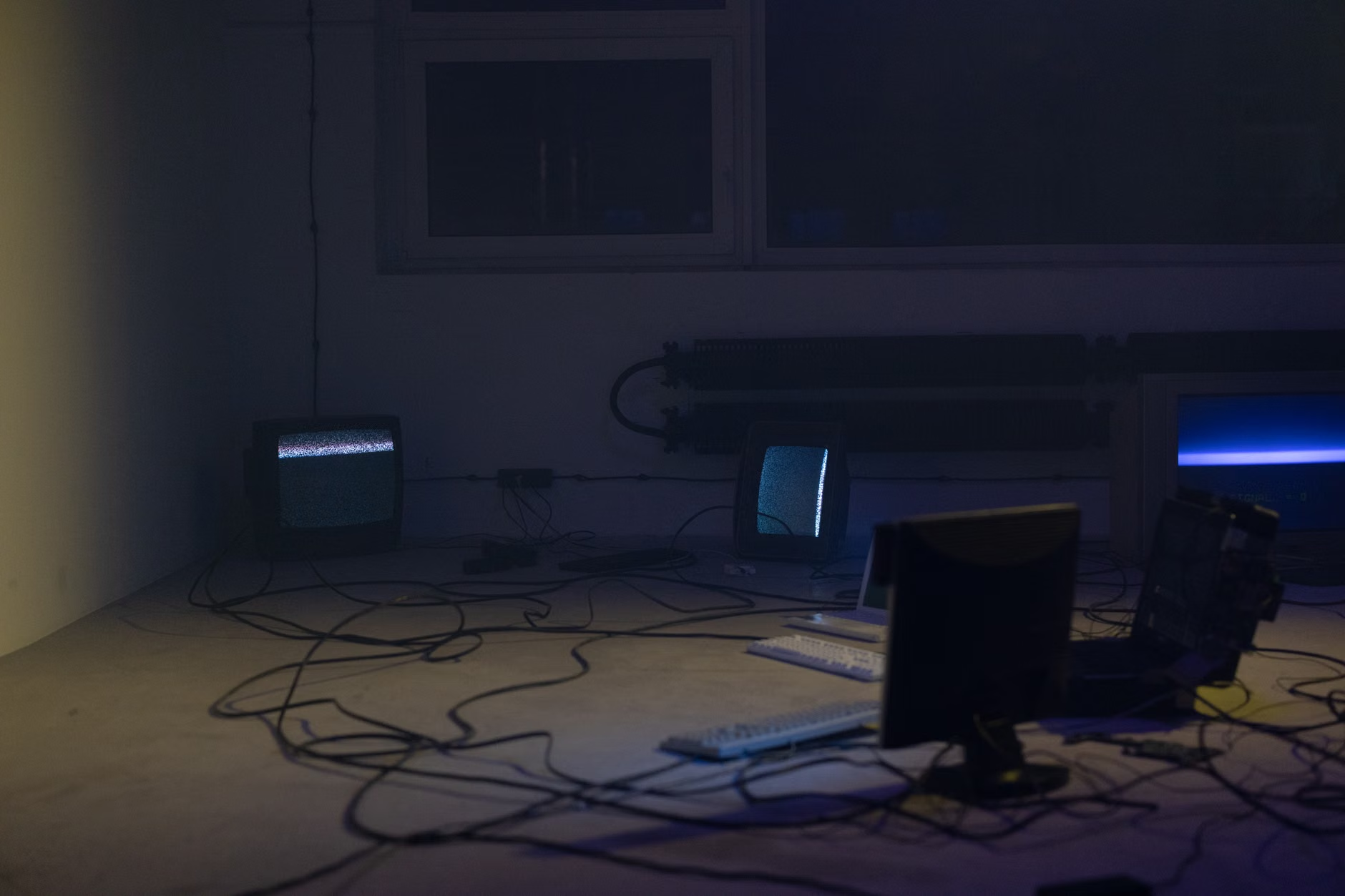
You sit down to watch your favorite movie or show, only to realize you can barely make out details in dark scenes. Shadows look crushed, colors appear muted, and the display feels dull. If you find yourself asking, "why does my tv look too dark?" you are far from alone. This is one of the most common display issues reported by television owners today.
A dim or dark television picture isn't always a sign that your display is broken. Modern televisions ship with aggressive power-saving features, complex High Dynamic Range (HDR) processing, and intelligent ambient sensors that frequently misjudge your viewing environment. In this comprehensive troubleshooting guide, we will break down the primary software settings, room lighting dynamics, source signal conflicts, and hardware failures that explain why your TV picture looks dark—and how you can fix it step-by-step.
Eco-Friendly Power Saving and Auto-Brightness Features
One of the most frequent reasons your TV screen looks dim out of the box comes down to modern energy regulations. Manufacturers are required to ship TVs with energy-saving modes enabled by default, which drastically caps peak light output.
How Eco Mode and Energy Saver Dim the Display
Features labeled as Eco Mode, Energy Saver, or Auto Power Savings actively restrict the television's backlight or panel brightness to reduce power consumption. While great for energy bills, these modes heavily restrict display luminance, making images look muddy and lifeless during normal viewing.
The Impact of Ambient Light Sensors
Many modern Smart TVs include an integrated light sensor (often called Ambient Light Detection or Eco Sensor). This feature adjusts screen brightness based on room lighting. If the sensor is obstructed, dirty, or miscalibrated, it may mistakenly detect a dark room and drop backlight levels to minimum, leaving you wondering why your TV looks too dark even during daylight hours.
Incorrect Picture Modes and Preset Calibration
Your television's active picture preset dictates how brightness, contrast, and color balance are processed. Selecting the wrong preset for your room environment is a primary reason a TV looks dark.
Cinema and Movie Modes vs. Bright Rooms
Presets like Cinema, Movie, or Filmmaker Mode are calibrated to match industry standards for light output in dark, theater-like environments. When used in a brightly lit living room, these modes will make the TV screen appear noticeably dark because they turn off artificially pushed brightness boosts.
Dynamic Tone Mapping and Gamma Calibration
Gamma controls how shadow detail transitions into highlight detail. If your gamma setting is adjusted too high (e.g., Gamma 2.4 or BT.1886 in a bright room), shadow detail gets crushed into true black, creating an unnaturally dark picture. Similarly, improper dynamic tone mapping can dim midtone elements in video content.
HDR and Dolby Vision Mismatches When Your TV Looks Too Dark
High Dynamic Range (HDR) promises vibrant visuals and deeper contrast, but it is also one of the leading drivers behind users asking why their TV looks too dark when streaming modern content.
SDR vs. HDR Peak Brightness Behavior
In Standard Dynamic Range (SDR), bright scenes trigger uniform backlighting across the screen. HDR works differently: it reserves maximum panel brightness strictly for small highlights (like explosions or sunlight flashes) while keeping average scene light lower to maintain contrast realism. On budget or mid-range TVs lacking high peak luminance, HDR content frequently appears darker overall than SDR content.
Dolby Vision Dark vs. Dolby Vision Bright
Streaming apps like Netflix, Disney+, and Apple TV+ often default to Dolby Vision Dark or HDR Dark modes. These presets are designed for pitch-black pitch rooms. Switching your picture setting to Dolby Vision Bright or turning on HDR Auto-Adaptation compensates for ambient lighting in standard living rooms.
Key Picture Settings Causing a Dark TV Picture
Understanding the distinction between core TV display sliders is critical when resolving dim picture issues. Misadjusting these controls can unintentionally crush shadow detail.
Backlight vs. Brightness Settings
On LED/LCD televisions, Backlight dictates the physical light output of the lamps behind the screen, whereas Brightness controls black levels. If your backlight is set low, the entire picture dims. Conversely, turning the "Brightness" slider down too low cuts off dark gray detail, turning detailed scenes into solid black blocks.
Local Dimming and Peak Brightness Sliders
Full-Array Local Dimming (FALD) dims individual zones of backlighting to improve black levels. However, setting local dimming to aggressive modes like High on certain TV models can cause overall scene dimming (blooming mitigation algorithms). Adjusting Local Dimming to Medium or Low often restores appropriate brightness levels.
Hardware Issues and Panel Degradation
If you have tweaked software controls and your TV screen still looks dark, the underlying cause may be mechanical or hardware-related.
Failing LED Backlights or Power Inverters
LED TVs use strips of light-emitting diodes to illuminate the LCD panel. Over time, individual backlight strips or the LED driver board can fail. If half of your screen looks dark or the display suddenly dropped 50% of its light output across all inputs, a failing hardware component is likely responsible.
OLED Auto Static Brightness Limiter (ASBL / ABL)
OLED displays utilize self-emissive pixels that protect themselves from burn-in using an Auto Brightness Limiter (ABL). When a screen shows sustained bright elements (such as sports matches or static gaming HUDs), ABL automatically dims the panel. Additionally, older OLED panels naturally lose peak luminosity as pixels age.
External Sources, Cables, and App-Specific Dark Screen Issues
Sometimes the TV display itself is fine, but the video signal passing into it lacks proper luminance calibration or bandwidth.
HDMI Bandwidth and Color Space Misconfigurations
Using an older HDMI cable or plugging a 4K streaming box into an unoptimized HDMI port can limit signal bandwidth. If your source device sends an RGB Full signal while your TV expects RGB Limited, dark tones will become heavily saturated and crushed.
In-App Video Player Bugs
Certain streaming apps on media devices (like Apple TV, Roku, or Fire Stick) occasionally fail to trigger proper HDR handshakes. Re-launching the app, forcing a resolution restart, or disabling match dynamic range in app settings can fix unexpected dimming.
Frequently Asked Questions
Why does my TV look dark even when brightness is set to 100?
If brightness is at maximum but the image remains dark, check your 'Backlight' or 'OLED Pixel Brightness' settings instead. 'Brightness' controls black levels, while 'Backlight' controls overall lamp output. Also ensure Eco Mode and Light Sensors are turned off.
Why does HDR content make my TV screen look darker than SDR?
HDR prioritizes realistic lighting contrast over uniform brightness. Midtones are kept natural while reserving maximum brightness for highlights. Budget TVs without high peak nit capabilities often struggle to process HDR correctly, resulting in an overall darker picture.
How do I turn off Eco Mode on Samsung, LG, or Sony TVs?
Navigate to System or General Settings on your TV menu. Look for 'Eco Solution' (Samsung), 'Energy Saving' / 'OLED Care' (LG), or 'Power & Energy' (Sony), and toggle all auto-dimming and ambient sensing features off.
Can a bad HDMI cable cause a TV picture to look dark?
Yes. An improper or damaged HDMI cable may fail to transfer modern HDR metadata or proper dynamic color ranges (RGB/YCbCr formats), causing crushed blacks or dark overall video signals.
Is my TV backlight going out if the screen suddenly looks dim?
If the screen is dark across all inputs, menu interfaces remain dim, or one half of the display is darker than the other, one or more LED backlight strips inside the panel may have failed.
Conclusion
When you ask "why does my tv look too dark?" the solution is usually buried inside energy management settings or dynamic range processing. Start by disabling Eco Mode, turning off ambient light detection, and adjusting your TV backlight sliders for bright rooms. If you are watching HDR content, ensure you select HDR Bright or Dolby Vision Bright presets to maintain optimal luminance in normal living environments.
By auditing your picture settings, updating source cables, and calibrating gamma for your room's light levels, you can eliminate dull picture quality and restore vibrant, crystal-clear visuals to your television display.
Related Reading
- best TV picture settings for movies — TV Picture Settings Calibration
- HDR vs SDR brightness differences — Understanding HDR Display Standards
- troubleshoot TV backlight failure — Diagnosing TV Hardware Problems
- adjust local dimming settings — Optimizing TV Local Dimming Options